Finally finished reading the book-long document (also a summary here). In short it recommends that to enhance the country brand of Finland, its people should focus on 3 strengths based around the idea of sharing Finnish practicality and problem-solving worldwide:
The most functional country in the world. Functionality: Finland to be developed into a Silicon Valley of social innovations
Drink Finland. Nature: Let’s make the lakes drinkable and serve organic food
Teachers without borders. Education: Finnish teaching protection force in peace work
One of the most interesting and exciting aspects about the whole report for me was, to be frank, how action-oriented it is. While it does have a significant current state analysis study behind it, most of its recommendations are actionable now, and they encourage public discussion of their findings and recommendations at their website.
Would definitely love to see this approach taken up by more countries. I can think of at least a couple that need a little bit of polish.
The year in search was dominated by the World Cup, but other events were significant according to Google’s Zeitgeist. Most of this trends were also mirrored in Twitter.
YouTube seemed to be all about quirky humour and Justin Bieber. The usual, really.
Facebook status updates, being more personal, showed the emergence of new acronyms but also mirrored the trends of the “global events” we al followed this year.
Blogging is maturing as contributors realise they can have an influence, but the gulf between personal and professional bloggers is becoming wider.
As you probably know if you read this blog, one of my passions is food, especially of the Mexican kind. Unfortunately, most of the Mexican food you find outside of North America is not really Mexican, so I make a point of testing Mexican restaurants when I’m traveling to make sure they are more Mex-Mex than Tex-Mex so that I can recommend them to friends.
You can find an abridged list after the map below (they’re listed by how far away they’re from Finland, with the first being the farthest out).
Viva México, Singapore, Singapore. Pretty decent decor. Indian & Pakistani staff wearing Mexican dress. Some of the items in the menu are Tex-Mex as that’s what people know so far away from the land of nopales, but the chef is from Oaxaca so he can recommend what to eat. I had caldo tlalpeño and chiles en nogada when I was there and they were very good (photos). From what I hear, they have to import a lot of the foodstuffs, even the rice (kinda funny as it’s in Asia).
Fonda de la Madrugada, Tokyo, Japan. A restaurant in a huge basement, descending those steps transports you from Harajuku to an Hacienda. Mexican movies shown in a corner. The chef was Mexican, even if the owners weren’t. The staff speaks Spanish and Japanese (few things cuter than a Japanese girl in a huipil), but no English. While it’s not the cheapest place to eat out, the food was absolutely worth it: we had guacamole, caldo tlalpeño, enchiladas and even carnitas a la michoacana (photos).
El Mexicano, Shanghai, China. Small place slightly out of town. Mexican owners. The pollo en salsa verde was not great, but the tacos al pastor more than made for it (photos).
La Palapa, New York, USA. A restaurant that wouldn’t be out of place in Coyoacán, even if the portions are American-sized. Their quesadillas were to die for (photos)
Tehuitzingo Deli & Grocer, New York, USA. The best taquería I’ve been to outside of Mexico City (no wonder as it’s smack in the middle of Puebla York). Once you get inside past the grocery part of the locale, you will reach a small corner of heaven in Hell’s Kitchen. Tacos de lengua, pastor, chicharrón or suadero, sopes, quesadillas de flor de calabaza… all washed down with a Pacífico (photos).
Rosa Mexicano, New York, USA. You realise the Mexican food market in NY has matured as they’ve gone from Tex-Mex to Mex-Mex to haute cuisine Mex. A selection of tequilas that will leave a connoisseur drooling, their arrachera & shrimps plate was very good and worth the price tag (photos).
Barriga Llena, Madrid, Spain. Part of a mature Mexican-owned chain in Spain, the food is close enough to its origins and the sense of humour is a breathe of fresh air.
Ándele, Barcelona, Spain. I used to visit Barcelona every year for work, and I always tried to visit this small place. The tacos are quite OK and they also sell Mexican foodstuffs and tequilas (indispensable if you live far away like me).
Anahuacalli, Paris, France. This is the only one I haven’t visited of the restaurants in this list, but everybody I know and trust who has eaten here recommends it. The founder has lived in France for 40 years.
Mestizo, London, UK. Mexican-owned as well. Also a little bit pricey, but the food was excellent. We had ceviche, tacos al pastor, pato en mole con ciruela, tamales, pozole, flan & crepas and it was all good (photos).
Taquería La Neta, Stockholm, Sweden. For a while the closest source for proper Mexican food, this taquería was opened in 2009. Their menu is simple: tacos and their relatives, but the results are excellent as they have their own tortilla-making machine (photos). Mexican-owned.
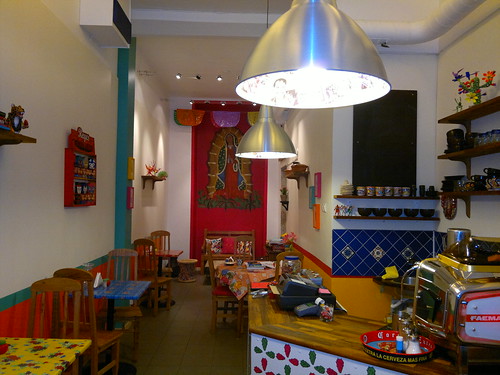
Café de Nopal, Helsinki, Finland. Recently opened. I just wrote a review about the place. They offer a “comida corrida” lunch every weekday with a choice of two/three main courses and brunch on weekends (photos). Mexican-owned.
When a Mexican moves abroad, one of the first things he or she misses is the food (obvious if you’ve read this blog for a while or know me personally). The Mexican food supply in Finland is very limited, so obviously many of us have had the idea to open a proper restaurant here where we could show our Finnish brothers what and why we long for: real tacos, sopes, tortas and other far-away delicacies.
One of those things that always make me wonder is how in this day and age, we can work very closely with people we don’t meet in real life. We can learn to know them, and share a lot of experiences together without being in the same place or knowing how they look. Then, when we finally meet them, we realise we already knew them.
I’ve always been interested in finding out “the other side of the story”. That was one of my main incentives in learning foreign languages, and the reason why I usually scan international newspapers. As a recent project put me in constant contact with Turkey, I was able to pick up this book at Istanbul airport and was able to read it through. While this blog gives a longer review of the book than I’d be willing to write here, the most interesting bit of the whole book was that for the peoples comprising Medieval Islam, Europe was an uninteresting barbaric fringe following an antiquated superseded religion, and so approached their contact with Europeans from a stand of perceived moral superiority. Not unlike the way Europeans viewed the peoples of the New World in the 1500’s.
The book then gives a summary of how those attitudes changed with the faster European development of the Renaissance to a situation where while European technical, scientific & military expertise was sought after, cultural contact was still avoided. 300 years later, the situation is starting to change as can be seen in the TED talk below:
Disclaimer: I know Turkey is in general much less traditionalist than other Muslim countries. It is generally agreed that the push West was started by Mustafa Kemal Atatürk, which was not covered in this book.
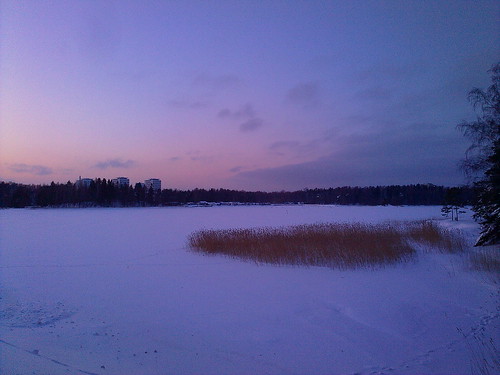
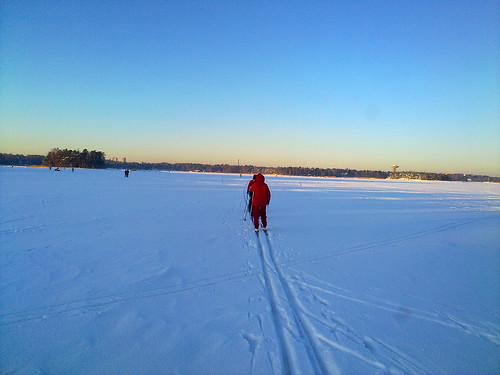
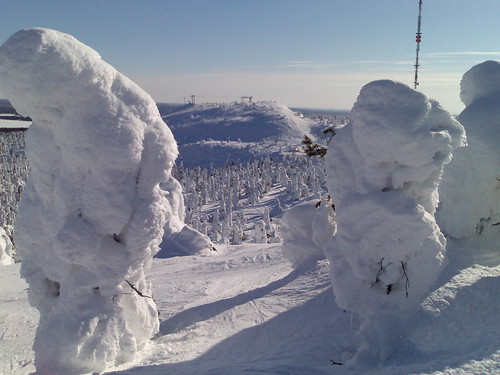
Cuando escuchan que vivo en Finlandia, mucha gente me pregunta cómo es vivir acá en invierno, especialmente cuando puedes llegar a experimentar diferencias térmicas como la de abajo:
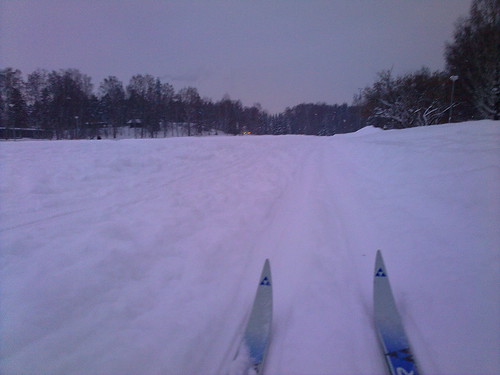
En realidad, yo pienso que no es tan difícil como parece. Al contrario de lo que pudiera pensarse, no me la paso añorando las playas de México todo el invierno ni mucho menos (obviamente no le voy a decir que no cuando se me presenta la oportunidad de ir, claro). Como donde crecí la nieve es algo que sólo se encuentra en las cimas de los volcanes, cada que llegan las nevadas lo disfruto enormidad y me preparo para los deportes y actividades de invierno: esquí de fondo (en tierra o sobre el mar congelado), esquí alpino (en Laponia o en Savo), patinaje sobre hielo o deslizamiento en trineo. Intentaría el hockey sobre hielo, pero la verdad es que el único deporte con bastones para el que no soy tan malo es el golf. Con probar salibandy tuve suficiente.
Otra cuestión es obviamente la ropa. Acá tienen un dicho con el que estoy completamente de acuerdo:
No hay mal clima, hay mala ropa
Uno tiene que saber vestirse de acuerdo al clima y también tener en cuenta el factor viento (-17 °C con viento fuerte te puede llegar a dar una sensación térmica de -40°C). Se dice que el 30% del calor corporal se escapa por la cabeza, así que el uso de gorro de lana o sombrero es recomendable. Además, necesitas guantes, bufanda, ropa interior larga, un buen abrigo o rompevientos y saber vestirte en capas: una capa gruesa no te protege tanto como varias capas delgadas, ya que lo que calienta es el aire atrapado entre cada una. En lo más frío del invierno puedo llegar a usar hasta 5 capas de ropa entre camiseta, camiseta larga, camisa, suéter, saco y abrigo. Sudaderas de microfibra o de plano suéteres de lana pueden ser útiles. Algunas personas también usan orejeras de lana o piel. Aún así, salir a la calle en invierno no está peleado con la moda o el estilo propio: no es necesario pensar que te vas a ver como muñeco de Michelin 8 meses al año. Contra lo que pudiera pensarse, en diez inviernos sólo he tenido que usar pasamontañas una vez y hubiera podido sobrevivir sin él.
No uso botas de invierno a menos que realmente haga mucho frío o me vaya a ir a hacer senderismo, pero unas buenas plantillas de lana y calcetines largos de lana o seda pueden hacerte el paro, aún con zapatos o tenis normales. Lo único que sí hay que tener en cuenta es la suela, ya que la nieve o el hielo favorecen las suelas de hule o plástico de buen agarre. Caminar al trabajo en invierno en zapatos de suela de cuero es intento de suicidio.
Lo más importante es escuchar a tu cuerpo y recordar que es un mecanismo maravilloso. Si estás aquí un rato podrás notar que te acostumbras al frío, y cuando en primavera el mercurio vaya de subida te va a empezar a dar calor a cero grados. Recuerdo que en mi primer año aquí sentía que se me caían las orejas con los primeros vientos de Octubre aunque apenas era otoño, ahora a menos que estemos abajo de -15°C no las uso o empiezo a sudar como si tuviera la cabeza en un horno.
Como dicen por ahí: Si te llueven limones, haz limonada.