Have been watching the classic series lately and am convinced that the world needs somebody like Carl Sagan more than ever. Not to speak for us, but to remind us why we have to find our own voice. In science, in society, in business and in life free inquiry (“the only sacred truth is that there are no sacred truths”) shouldn’t be overlooked or mocked as often as it is. We enjoy the fruits of science every day, but do not value its methods enough.
As a bonus in this blog post I share with you my favourite Sagan speech: Pale Blue Dot 😉
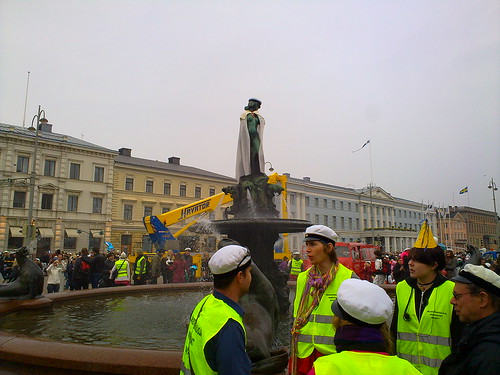
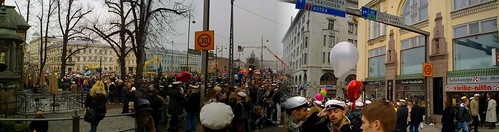
If you don’t know how May Day is celebrated in Finland and why it’s important, this old Helsingin Sanomat article will give you the lowdown. This year it was a little bit chilly but not unseasonably cold. I noticed there was less people wearing high school graduation caps and more “carnival” style headwear. I guess some sort of ethnographic inventory is in order, as still people don’t know what my cap is all about.
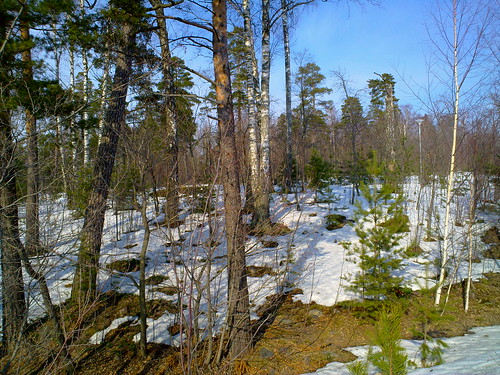
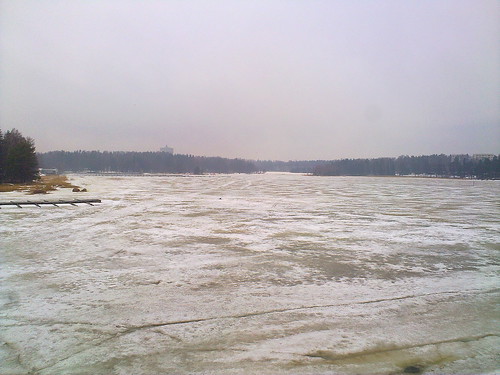
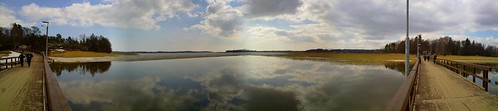
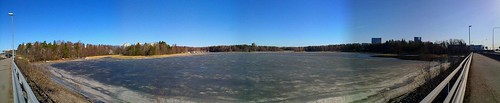
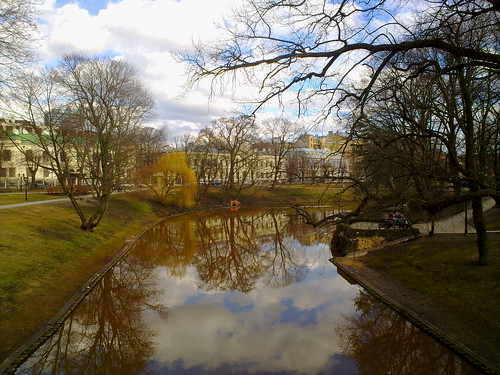
The Great Ice Age of 2009-2010 is finally over and with the big melt behind us spring is upon the land, with summer not far behind. A chronicle in pictures of the changes brought by April below.
After the latest soundbites from mainstream Finnish politicians regarding their stance against immigration and their apparent lack of hard knowledge of the subject, I decided to set the record straight.
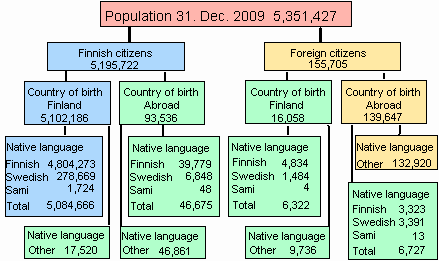
With the help of Statistics Finland (Tilastokeskus), it was not difficult to find the exact numbers of immigrants living in Finland as of end of last year. The breakdown in the chart below.
As you can see, 155k people of foreign citizenship live here (2.9% of the population and one of the lowest proportions in Europe). Of those, 34k are refugees, i.e. 22% of all foreigners in Finland and 0.64% of the total population of the country. Therefore, it is ridiculous to keep on mixing refugees with immigrants if they are only one fifth of the total amount of foreigners living here. By the way, that most demonised group of all, the Somalis, are less than 5k people in the whole country.
Now, after a little dose of facts, let’s tackle the 3 statements that have caught my attention lately:
“Maassa maan tavalla”: This phrase, part “In Rome do as the Romans”, part “Love it or leave it” was uttered to great effect by the leader of the Finnish Social Democrats. She went further on to talk about the need for foreigers to obey the law and learn the language. My first problem with this statement is not its content, but its patronising tone. When you move abroad you know you will face new situations and have to adapt to your environment, which does include learning at least some of the local language. Following the law is also part of this process (who wants to move thousands of kilometres at a considerable cost only to end up in jail?). Furthermore, my second concern is related to the fact that Finnish laws and Finnish customs are not the same thing. Are we a tolerant enough society to accept people who look, dress and sound different as long as they contribute to society and pay their taxes, or is there an ideal of Finnishness they need to adhere to? Have we agreed on what that ideal is?
Immigrants coming to Finland take jobs from Finns: Eero Heinäluoma, another SDP figure, took this cheap stab recently in an interview, further saying that if there is racism it’s because there aren’t enough jobs around. Let me get this straight: first we’re worried that foreigners (that “very homogeneous” group including e.g. IT workers, PhD students and people with low education from all over the world) don’t contribute to society and live off social security, then we’re worried because they have jobs? Furthermore, Mr. Heinäluoma doesn’t seem to have a firm grasp of elementary economics: the amount of jobs available is not fixed, it fluctuates with supply and demand. In a functioning market economy such as Finland’s the more people employed means an increased demand for other products and services, generating a ripple effect accross the market. As one of the Ilta-rags joked, the only thing he was missing was saying that “foreigners steal our women“.
Ville Rydman’s views on immigration: I’ve been meaning to comment on the platform of this young National Coalition Party leader for some time. He mentions that recieving skilled migrants is challenging as Finland would be depriving developing countries of talent, while opening the doors to unskilled migration will create an uneducated underclass. He’s wrong on both measures: skilled migrants earn experience in Finland that can later be transferred to their countries of origin, while unskilled ones have here educational opportunities probably unavailable for them otherwise. I personally know examples of both. He then reveals his true colours by saying that immigrants should integrate “fully” to Finnish laws (which is fine) and Finnish ways (discussed above) while expressing that multiculturalism is both wrong and dangerous, without amplifying much further on either statement. If you simply don’t want people coming here, then why don’t you say so straight up and stop the posturing?
These are only 3 recent examples from 2 mainstream parties, but also certain Centre candidates share the same views (Paavo Väyrynen anyone?) and obviously our “friends” the True Finns are the reason why this whole brouhaha started, after their critical stance of immigration won them many votes in the last elections. With the economy in the doldrums we knew immigration, with its demostration of the fear of otherness, was going to be an easy target to fish votes and unfortunately were not proved wrong.
Finland deserves better politicians (and politics) than this.
The snow and ice are fully gone and cycling season is on. Already close to 100km done in the past couple of weeks and I’m one happy camper (I mean, happy biker).
I could almost swear my body is adjusting to the exercise ;-).
Severing links, however temporarily, is extremely painful in both personal and economic terms. You can ask the 7 million stranded passengers for their opinions if you think otherwise. Many of them have been using social media tools to somehow cope with the situation, as Teemu Arina explains.
The past few days have looked quite a bit like a teaser of what a world without oil would be. Hopefully it serves as a wake-up call to us all.
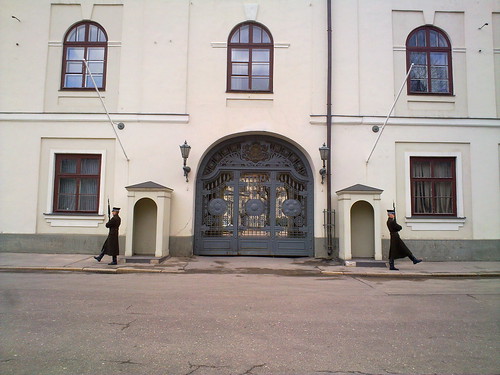
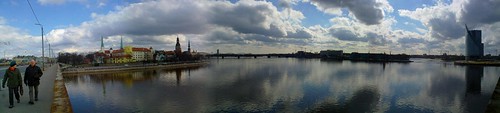
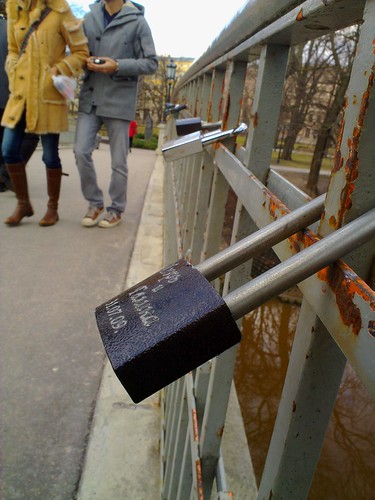
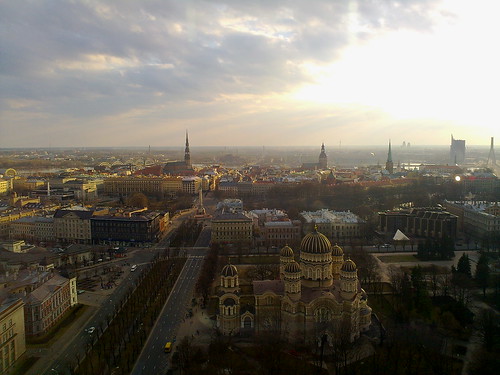
We were lucky enough to have spent a couple of days of the Easter weekend in Riga, capital of Latvia. The city has a great collection of Jugendstil (German Art Noveau) buildings from the 1930’s and it was very nice to walk in its cobbled streets, even if the weather was not much better than Finland. It was very interesting to see how much investment has come from the Nordic countries, with a large amount of Finnish, Swedish and Norwegian companies present in the country and a partly-renovated airport that looks decidedly similar to those of Oslo, Copenhagen, Stockholm & Helsinki with its use of wood, glass and iron.
The country has a long history of foreign occupations from Germany, Sweden and Russia, so a visit to its museums is definitely recommended to get some background information on the way the country came to be what it is. Furthermore, it currently tries to recover from the after-effects of the global financial crisis, when it’s economy pretty much collapsed. Not surprisingly, travelling here is relatively cheap, but due to inflation consumer prices are almost at Scandinavian levels.
The break was very welcome indeed and I’m happy to have crossed out the last of the Baltic countries I was missing.
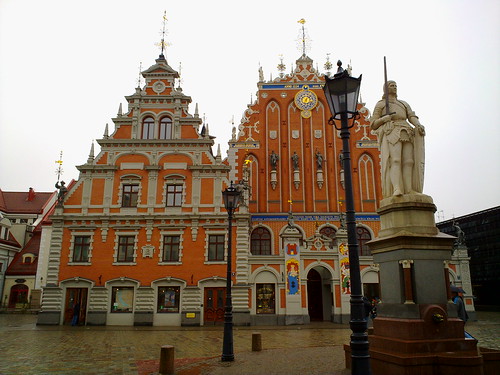
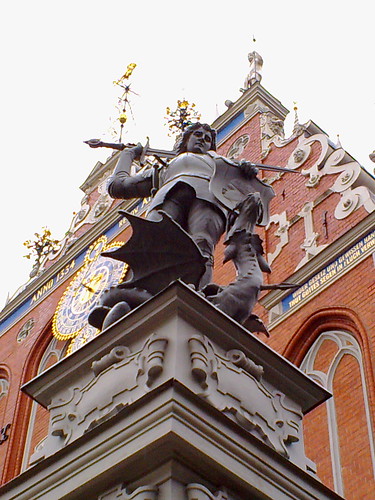
The House of Blackheads with the statue of Roland, one of the main hallmarks of the city.St. George, a detail of the House of Blackheads
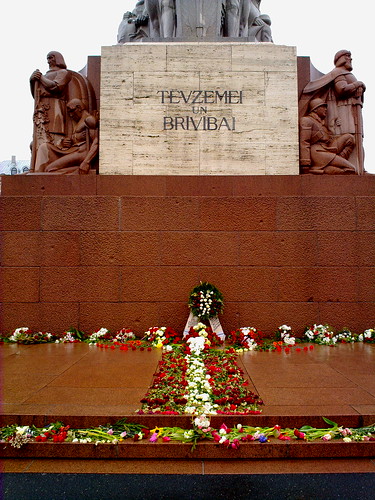
The Monument to Freedom. Latvians renew the flower offerings every day.
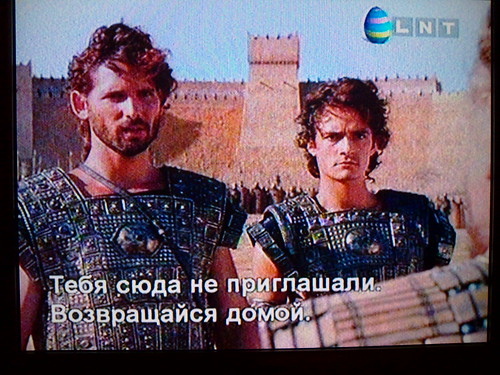
The country has a sizable Russian-speaking minority, so foreign TV programmes are dubbed in Latvian and subtitled in Russian.
Every once in a while I get asked by friends (or friends of friends) if I have any advice to give to young people about to start university. Some points below:
Be honest with yourself in deciding what you want to study. If you don’t like it, don’t sacrifice 4-5 years on it.
Even then, understand what is the labour market like for your chosen field.
A diploma might be a requirement, but extra-curricular activities, other skills or even social connections migth very well be what opens the door for when you get a job.
Keep a good relationship with your teachers if you can. If you earn their trust, they might help you later on in your career.
Be aware that as corny as it might sound we do live in a globalised economy. Your competitors (and your partners ) might not be in/from the same city, country or continent as you.
With that in mind, evaluate whether you need to have a good understanding of languages, cultures and physical challenges (such as timezones). Studying abroad (as an exchange or full degree student) will give you first-hand experience in all those things, but if you do not have the chance, try to engage with the exchange students at your university and sign in to foreign-language courses.
Understand that globalisation doesn’t mean Americanization. While the US is still very important, so are Europe, China, India, Latin America, Africa…
Regarding your career choice, be assured that in many cases it won’t last forever. Market and workplace conditions change really fast. According to some studies, the average graduate will have 5 different careers before he retires. I can tell you I have already had 3 very distinct phases in my working life (from engineering to sales to marketing) and I’m not yet 30. Furthermore, my current professional field didn’t even exist 7 years ago when I finished my bachelors degree.
As such, the most important ability you will graduate with is that to unlearn and relearn. Never lose that flexibility.
Be open, be brave, try new things (even if they’re not related to each other or your current field). You never know when that knowledge of space exploration, basketball or Latin American rock might help you (those are real examples from my career).
I love watching movies, especially at home. I have a Sony full-HD TV & home theatre system at home and am planning to get a compatible Blu-Ray player of the same brand at some point. My efforts to go HD with my movie collection have hit a snag, however: I don’t buy all my movies in Europe so I need multi-region players. Sony doesn’t seem to sell multi-region Blu-Ray players, only DVD players.
Why wouldn’t I get all my stuff here? Simple, they don’t sell many Mexican or Asian movies here, and for Disney movies especially I like Mexican dubbing, just as for anime I prefer Finnish dubbing instead. I don’t download movies nor buy pirated goods, so am especially annoyed by all the warnings in the movies I buy every time I play them.
Why would the movie industry punish me by treating me like a delinquent instead of a customer? Why can’t enjoy media I pay for? Don’t they understand I’m a paying customer asking for a product, if they would only provide it to me?