Visited London for another one of those lightning business trips. One of these days I’ll have a chance to catch up with all my friends there. More photos in the usual place.
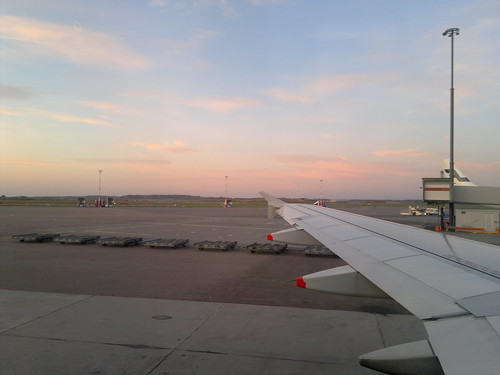
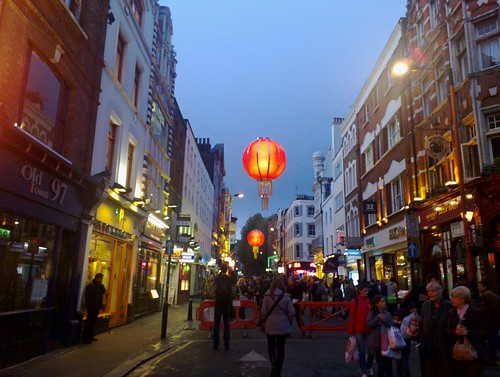
Visited London for another one of those lightning business trips. One of these days I’ll have a chance to catch up with all my friends there. More photos in the usual place.
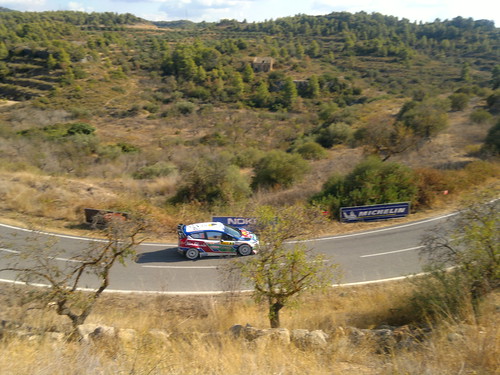
Spent a long weekend in the Catalonian countryside for work. I’m starting to become quite well acquainted with rally now. More photos in this set.
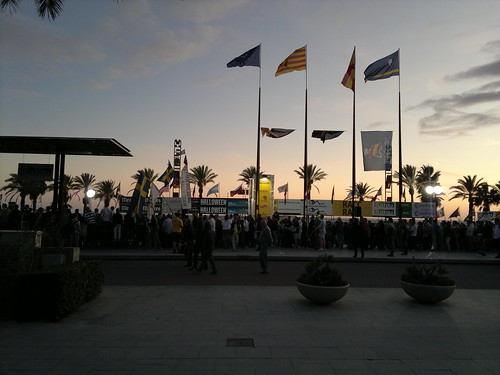
It’s been a tough 2011 for Europe and it’s going to get tougher. The role of Finland in this whole mess is deeply contested, and is a result of the changes in Parliament after the elections last spring. I personally think Finnish politicians are too smug (see Halla-Aho’s Greece comments). They treat other countries in the EU like a poor relation, but they seem to forget that Finland might be on the receiving end of EU aid sooner than we would like. While the current budget deficit is quite manageable, Finland has the fastest-aging population in Europe.This will have a huge impact in social services and pensions, so I would hope for a return to traditional Finnish caution from the current brashness.
If I put my Mexican hat on, it is very ironic to see developed countries not following their own rules and recommendations for economic recovery (see cartoon in Spanish). I guess the IMF’s medicine is too bitter when you try it yourself.
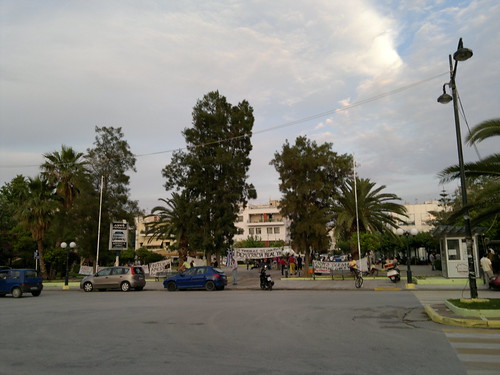
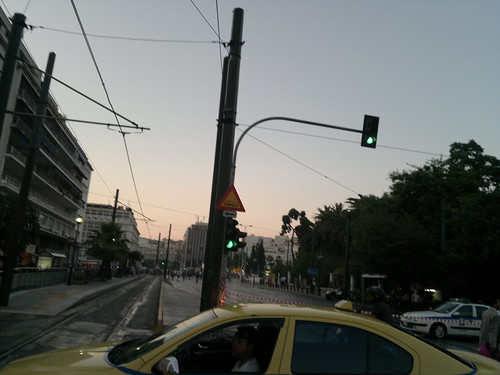
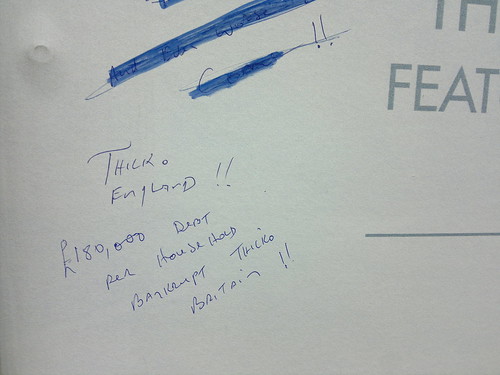
Below you can see some pictures I’ve taken that show the discontent from the general public in different parts of the continent.

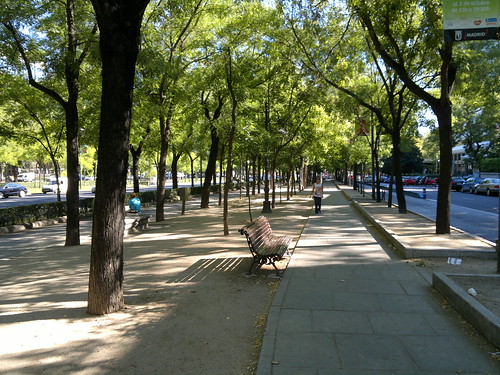
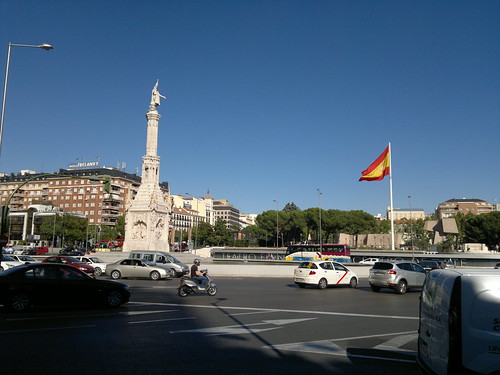
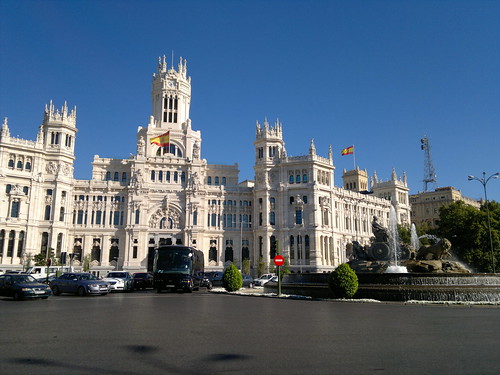
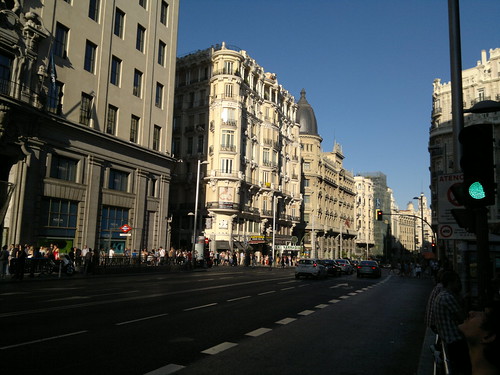
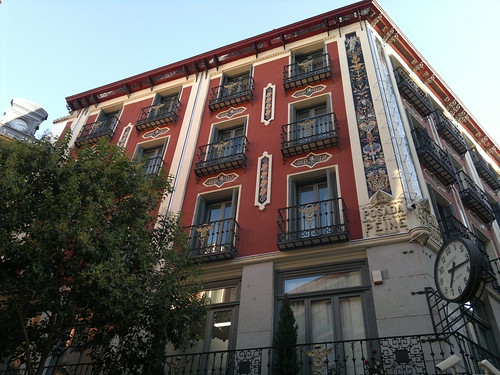
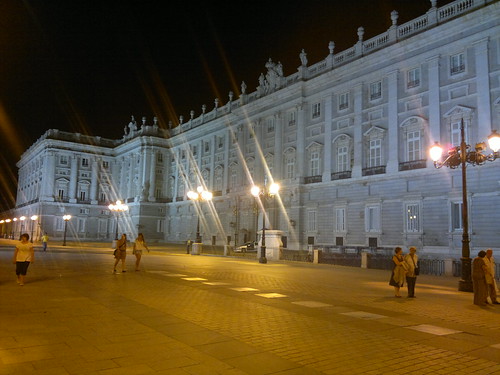
It’s always a pleasure to visit Spain, even if for work. I’ve always found it funny that for the Finns Spain equals sangría & beaches, whereas for Mexicans Spain is all about our shared culture & history. This time I did have a slot to walk through the city after my meetings, so I used it. I’ve always been treated well in Madrid (even if they immediately know where I’m from due to my accent) and people more than once remarked how Mexico is the closest of the Latin American countries to Spain. It was however funny to feel that, as close to my roots as it is, it is not home this side of the pond.
More pictures, as usual, in the set.


This is a very interesting book by Niall Ferguson that has already been reviewed here and here. It also has a companion TV documentary.
Behind each great historical phenomenon there lies a financial secret, and this book sets out to illuminate the most important of these. For example, the Renaissance created such a boom in the market for art and architecture because Italian bankers like the Medici made fortunes by applying Oriental mathematics to money. The Dutch Republic prevailed over the Hapsburg Empire because having the world’s first modern stock market was financially preferable to having the world’s biggest silver mine. The problems of the French monarchy could not be resolved without a revolution because a convicted Scots murderer had wrecked the French financial system by unleashing the first stock market bubble and bust.
This should be required reading or viewing for everybody who handles money every day i.e. for all of us. For good or ill our livelihood depends on understanding the financial events around us but in order to graduate from high school you need to understand science, biology and language but not how to calculate compound interest. Money, as they say, is portable power. Get something to eat and watch the full TV documentary below (also divided by episodes in the PBS website).
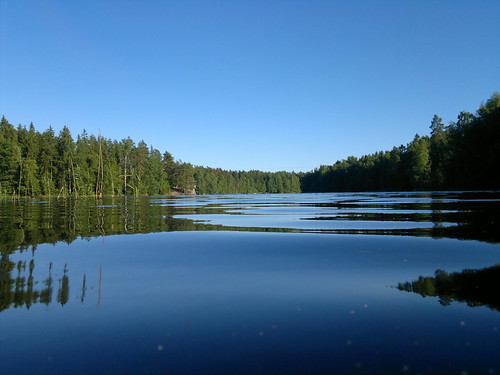
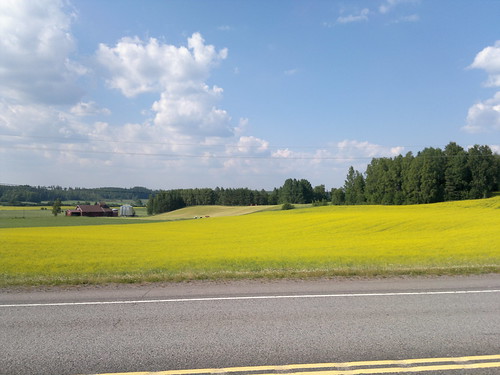
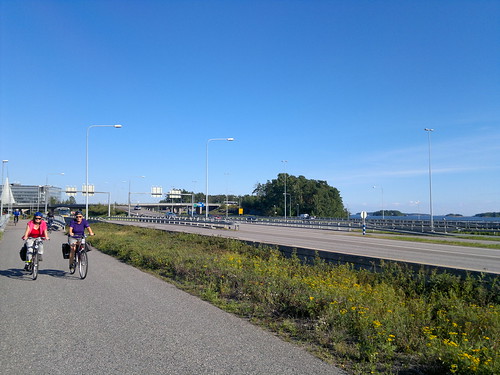
The old joke goes that in Finland it’s cold for 3 months and very cold for the other 9, but it was not the case this year. Part of June, most of July and a bit of August reached 30°C, for one of the warmest summers in 100 years.
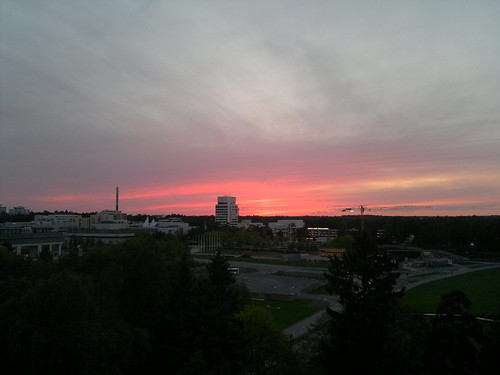
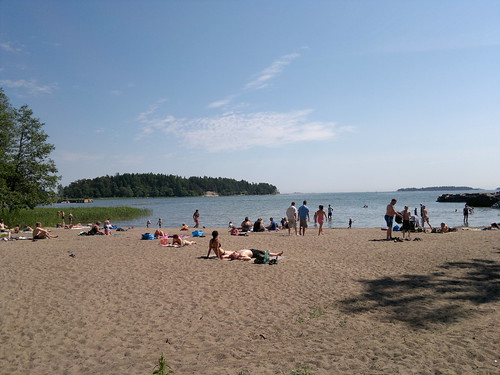
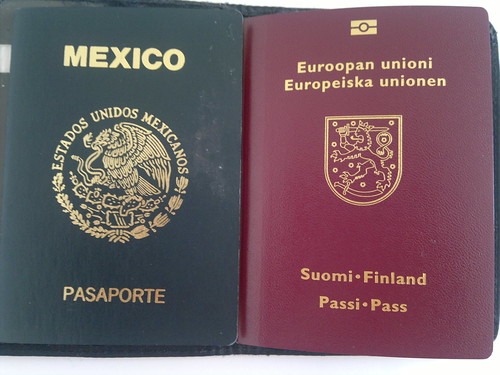
As long-time readers of this blog know I have lived slightly over ten years in Finland, basically one third of my life and almost my whole adulthood. A couple of months after my son was born I applied for citizenship, and it was granted slightly over a week ago (even if I didn’t find out until last Friday). It mirrors that well-trodden path elsewhere from immigrant to citizen, with the addition that it’s obviously the first time I go through it and it’s also a relatively novel phenomenon for the country I can now call my own.
The applicable Finnish law has significantly changed during my time here. Until 2007 time as a student or worker without A status (whose granting was always a mystery to me) didn’t count towards citizenship, which meant the 6 years I had spent in Finland by then were useless. This changed when four years ago the law was modified so that all the time spent in the country legally counts toward citizenship, regardless of whether it was spent as a student, a worker, a Finn’s family member or another reason. The residency requirement was 6 uninterrupted years for singles, 4 for those married to a Finnish citizen with the last 2 being continuous (i.e. if you moved away and came back even if you had lived here long enough you had to wait another two years to apply).
Besides the residency requirement, the law also stated that applicants should have a good command of one of the official languages of Finnish and Swedish (e.g. proven with the official Yleiskielentutkinto test which I took in 2007) plus a clean criminal record. Even minor fines could count against you. You also needed to show a demonstrable source of income.
I had no problem with those prerequisites, but the challenging bit for me was that when filling out the citizenship form I had to list all my absences from Finland since I moved here. Especially after ten years working in a multinational corporation and constant trips to visit my parents it was a challenging exercise (as you can probably gather from this Flickr collection). I created an Excel table with Destination(s), Travel purpose, Dates & Duration that gave me a total of over 90 absences from Finland (it could have been worse, but I was a full time student for the first 3 years). I understand very well why this is required (visiting e.g. Helmand in Afghanistan wouldn’t look good, I guess unless you’re a peacekeeper) but it was a chore. Thankfully I had my old passports, Dopplr & Flickr to help me out. I’m positive the list submitted was accurate. Based on the processing times published in the Immigration Service’s website I expected it to take at least a year, if not more.
Funnily enough I was awarded Finnish nationality right before the law was loosened up a little again (now you need one or two years less of residence, but you still have to prove the other points).
Unlike say, Spain, the United States, or Mexico, Finland doesn’t organize a ceremony of any kind for awarding citizenship nor an oath of allegiance of any sort. You “just” get a letter (blame it on Finnish distaste for useless ceremony if you will). As of last Tuesday, I’m now a Finn (or at least a Finnish citizen).
Every one of us is a product of our background and our experiences. Since the turn of the century I’ve learned to understand the Finns: their language and the way it modifies their thought processes, their love of nature, their diligence for hard study and hard work but respect of free time, their love of exercise and sports, their complex relationship with coffee and alcohol, their modesty, openness, directness and practicality, their trust in their state institutions (especially for education and security), their love of salmiakku, rhubarb pies, mämmi, new potatoes with dill, salmon, reindeer, sausages, more berries than I can name in languages other than Finnish and Karelian pies, their view that having sauna next to a lake or sea is the best way to end a summer’s day, the impressive mood changes matching with the seasons, their love of hockey and victories over Sweden, their stubbornness to the point of suicide (a.k.a. sisu, they say), and many other things. During my time here I’ve taken the tasks of internalising the positives, tolerating the negatives and trying to bring a bit of my own to the table. It’s not about this place and this people aren’t good. It’s about we can be better (crap, it still feels weird to say we).
If I didn’t like it here warts and all I wouldn’t have stayed this long. During that process of contact and adaptation, you start identifying yourself with your host society if the relationship with it is at the very least cordial. I won’t lie if I say I applied for citizenship almost purely for practical reasons: I have now the right to live permanently with my wife and son; travel to certain places like the US, Africa and the Middle East is easier (Finns have visa-free travel to 170+ countries, Mexicans to 120+) while coming back should be easier; I now have the right to influence where my taxes are used and where the society is going through my vote; I can even move freely to another EU country if I have a reason to do so.
However, I find myself in the situation where my sense of identity is being modified. Regardless of whether I liked it or not, one of the many factors that defined me in the eyes of others was the fact that I’m a Mexican in Finland, a foreigner, an immigrant. That meant (depending on the audience) that I always had to be extra careful and try to give the best possible impression, as they wouldn’t necessarily see me, but what I represent. It is a huge responsibility to feel you’re the only sample somebody knows of a country of 110 million people or of the 200,000 immigrants in Finland and you have the chance to make or break their stereotypes. While that is still somewhat relevant the turn from outsider to insider makes it weaker. I have proven myself. I’ve been measured, examined and approved. I am a part of this society and nobody can take that away from me. I am still me, but what me is evolves with my experience. Whichever term you want to use: new Finn, naturalized Finn, Mexican-Finn, Finn-Mexican, Finn of Mexican origin, etc. it is not anymore foreigner or immigrant.
Since this whole phenomenon is so new for Finland itself I know I will again be doing some trailblazing (sometimes I feel like Antonio Banderas in 13th Warrior, while on others like an Old West pioneer) and I know people with sympathies with the extreme right will never see somebody like me as equal to them. The good news is that my vote counts too and we are equal before the law. If they can’t live with that it’s their problem, not mine.
I am currently traveling for the first time abroad using a Finnish passport besides my Mexican one. It feels nice to be part of the society I’ve spent so long trying to fit with without losing the official link to my roots in the place where I was born.
Kiitos.
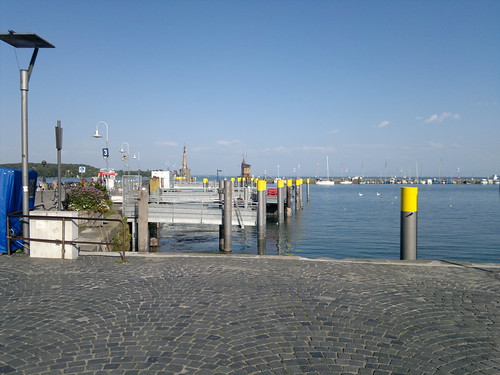
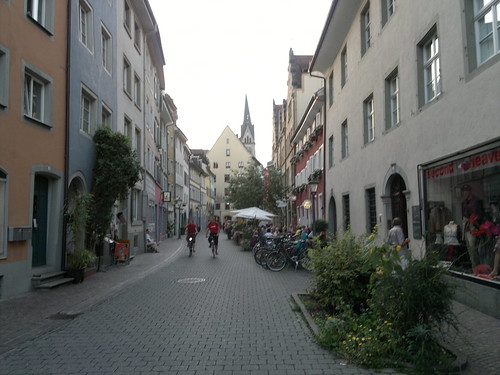
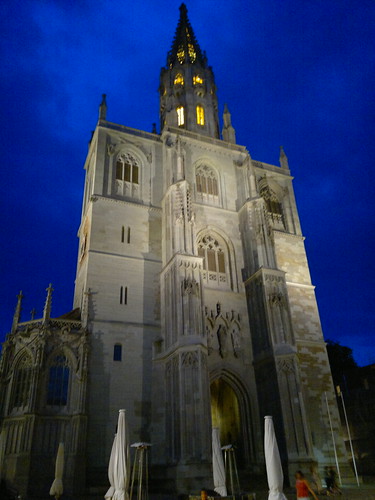
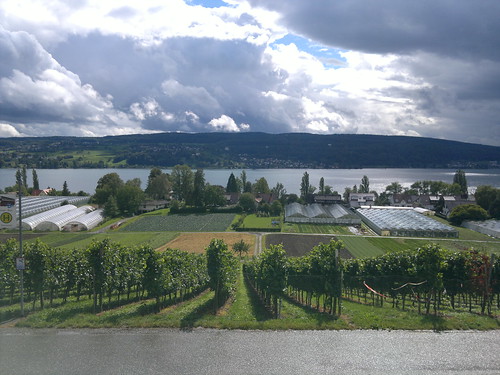
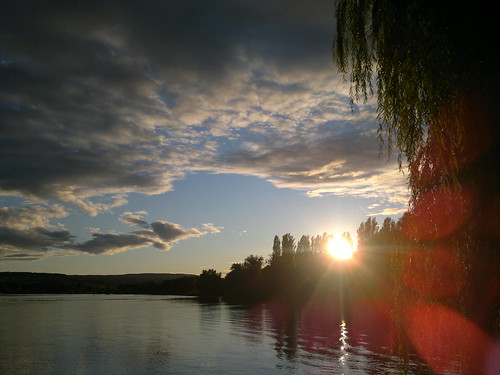
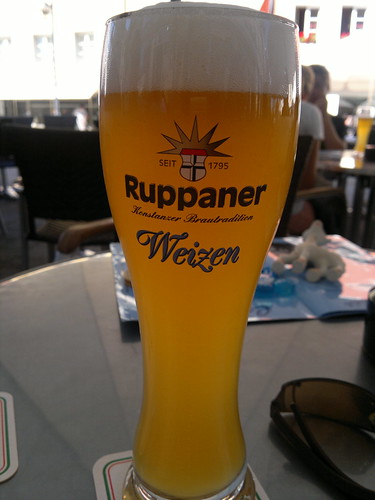
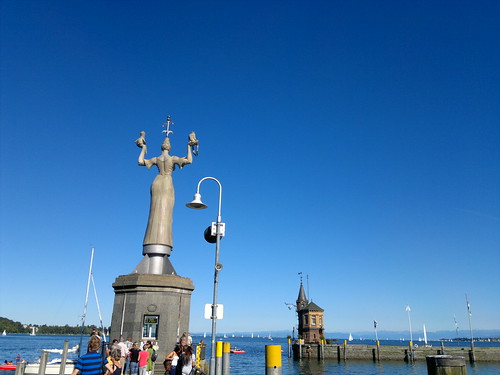
We visited Konstanz in southern Germany for the wedding of a couple of friends. I had never had the chance to visit that corner of Europe, and I would actually quite recommend it during the summer months. The wedding was beautiful and a good time was had by all before, during and after the party. You can find some photos from our visit below. The rest of the pictures, as usual here.
For a few months now I have been using a genetic testing service called 23andme (Wikipedia). Their promise is quite simple:
Gain insight into your traits, from baldness to muscle performance. Discover risk factors for 97 diseases. Know your predicted response to drugs, from blood thinners to coffee. And uncover your ancestral origins.
The process is very straightforward. After sign up and paying a fee (+ shipping and handling) you get a small plastic tube. Spit on it, send it via DHL back to their labs in the US and wait to get your results.
You do have to agree to a pretty hefty disclaimer, and there’s a reason for it. 23andme only provide genetic testing and related services and are not a medical services provider. Furthermore, the information you can gather from this procedure can have profound consequences for you and your family: maybe there’s an inheritable disease doing the rounds in your folks (Alzheimer or Parkison have been thoroughly researched, e.g.), or you discover relatives you didn’t know you have (or indeed, find out you’re not related to who you thought you were).
Once you register you are granted access to their website to familiarize yourself with their interface and the possible results you could get. Their service is divided into four parts: My Health (genetic disease carriers and drug response), My Ancestry (analysis of X-chromosome and mitochondrial DNA for genetic genealogy), Sharing and Community (“social genetics” features), and 23 and We (voluntary participation in genetic research through surveys).
The most interesting sections for me were the first two. Regarding health I was able to confirm what I already knew from my family history plus a couple of things that I suspected but I had no certainty about such as the fact that I metabolize caffeine relatively slowly, which explains why I don’t need many cups of coffee to get my “latte high”.
The ancestry bit was also very interesting. I know a fair amount regarding my ancestry up to my great-grandparents and there are a couple of things I can gather given the areas of Mexico where they come from, but unfortunately doing a full genealogical research European style is out of the question since records in Mexico have been destroyed or lost in the Independence War, the Mexican Revolution and the Cristero War. What I found was that my mitochondrial DNA (basically my mom’s mom’s almost ad infinitum line) is Mexican Indian from the Pacific Ocean from the Ice Age migrations through the Bering Strait when the Americas was being first populated (phenotype doesn’t equal genotype, my mom looks more Caucasian than I do), while my X chromosome shows Middle Eastern (possibly Jewish or Lebanese) ancestry, which is also consistent with the recently documented migration of Spanish Jews to Northern Mexico to avoid the Spanish Inquisition. Furthermore, while the majority of my genetic markers are European, I do have a third of Asian/Native American (back to the Bering Strait bit) ancestry plus a smattering of African inheritance. It all makes relative sense based of what I know of my family’s history.
Basically what I learned in my lessons of Mexican History through high school is not only correct, it shows in me.
Unfortunately 23andme’s reference database is not perfect, but thankfully the Mexican Genomics Institute is doing a very good job in analyzing what people from the Bravo to the Usumacinta Rivers carry in their genes. All hail Saint Google :).
Through their community features the service calculates other possible genealogical matches (basically people who could be related to you who have also used the service). I’ve found mostly Mexican-Americans (obvious as their service is based in the US and they do not ship to Mexico due to our awesome customs officials) plus a smattering of people with Spanish ancestry and a lone Colombian with (I suppose) Amerindian ancestry.
Then there’s the research bit. It’s basically a bunch of surveys they use to help in correlating the presence of certain genetic markers with physical or medical traits. It’s interesting but I haven’t used the service long enough to have my answers help in any medical discoveries.
The only blemish to the whole thing is that we could get test results for my son. He’s so young that his drool is too diluted (after all the little man is teething), which means they cannot extract enough genetic material for analysis. With the way things are developing, I wouldn’t be surprised if they’re able to do it in a year or two.
All in all, a very interesting experience even if I’m just really getting started. If you want to know more about factors that could affect your health plus your ancestry and are not afraid of the power of information I truly recommend it. Other services only do one or the other.
The summer is over, and so are the different national team tournaments. The overall balance I would say is overwhelmingly positive, but there are definitely some things that should be improved, specially with regards to planning.
In June, the A squad beat every team in its path towards the continental trophy quite decisively and took the Gold Cup, qualifying to the Confederations Cup in 2013.
Also in June, the national team played the Women’s World Cup, qualifying for the first time in more than ten years and winning it’s first couple of points, but bowed out after the group stage.
In July, a horribly patched up C or D team (8 U20 players, 11 U22 players and 5 senior players not part of the original Gold Cup squad) played the Copa América as guests and finished dead last. Ouch.
Also in July, the U17 Tri hosted and won the WC for their category. Beating Germany in the semis with an overhead kick by an injured player and playing the final in front of 100,000 delirious fans at Azteca Stadium was surely unforgettable for everyone.
Finally, the U20s reached a honourable 3rd place in the WC for their age group in Colombia, knocking out the hosts and beating les Bleus for bronze.
The cherry in the cake for me was Chivas beating Barcelona in a friendly (and currently leading the standings in the Mexican league after 6 games). 🙂
As said, overall the balance is positive with 2 golds and 1 bronze out of 5 tournaments. However in the case of the Copa América a lot could have been done to either negotiate participation with the A team or not attending at all (even after removing players for a scandal just before the tournament). If the players and the teams are improving so should the federation.